

Understanding PMOS (Formerly PCOS): More Than an Ovarian Condition
For many women, the journey begins with a quiet sense that something in their body has changed. Their periods become unpredictable. Acne appears without explanation. Unwanted facial hair becomes a source of frustration or embarrassment. Losing weight feels far more difficult than it should, and a provider may have mentioned insulin resistance without fully explaining what it means.
By the time these women arrive in my practice and receive a diagnosis of polyendocrine metabolic ovarian syndrome (PMOS)—previously known as polycystic ovary syndrome (PCOS)—many have spent years searching for answers. Along the way, they may have questioned their bodies, their choices, and even themselves. [1]
The first thing I want them to know is simple: You are not alone, and this is not your fault.
As healthcare providers, we have an opportunity to help women understand what is happening in their bodies, recognize the connections among their symptoms, and find a path forward.
PMOS is one of the most common hormonal and metabolic conditions affecting women during their reproductive years. Millions of women worldwide live with it, yet far too many go years without an accurate diagnosis. [1,2]
And there is a hopeful truth we can share with our patients: PMOS can be treated.
Although there is not yet a cure, the right combination of sustainable lifestyle changes, medication, and appropriate hormone therapy can ease symptoms, protect long-term health, and help women feel more at home—and more empowered—in their own bodies. [2,3]

Understanding PMOS and Whole-Body Hormonal Health
What Is PMOS?
PMOS is a hormonal and metabolic condition that affects the entire body, not just the ovaries. It can influence ovulation and fertility, but it can also affect how the body uses insulin, regulates hormones, manages energy, and responds to inflammation. [1,2,4]
The condition looks different in every woman. One may struggle primarily with irregular periods, while another is more troubled by acne, unwanted hair growth, or thinning hair. Some women have difficulty becoming pregnant. Others have few obvious symptoms and do not receive a diagnosis until testing reveals insulin resistance, prediabetes, or high cholesterol. [2,4]
Symptoms can also change over time. What begins as stubborn acne or irregular periods during adolescence may later appear as fertility concerns, weight changes, fatigue, or rising blood sugar. [2,4]
That is one reason PMOS can be difficult to recognize. There is no single symptom, body type, or experience that defines it. Our patients don't have to check every box for the condition to be real. [2,4]
Why Was PCOS Renamed PMOS?
Until recently, PMOS was known as polycystic ovary syndrome, or PCOS. But the old name created a great deal of confusion, beginning with the word polycystic. [1]
Many women with the condition do not have ovarian cysts at all. The small circles that sometimes appear on an ultrasound are usually immature follicles, the tiny sacs in which eggs develop. They are not true cysts. [1]
The old name also made the condition sound as though it began and ended with the ovaries. For years, that narrow focus meant many women received help only when they wanted to become pregnant, while concerns involving insulin, metabolism, skin, hair, heart health, and emotional well-being were too often overlooked. [1,2]
After years of international research and consultation, the condition was renamed Polyendocrine Metabolic Ovarian Syndrome in 2026. The new name may be longer, but it tells a much more accurate story. [1]
Polyendocrine means that more than one of the body's hormone systems is involved. Metabolic acknowledges the important role of insulin resistance and the way the body processes and stores energy. Ovarian recognizes that the ovaries, particularly ovulation and fertility, may still be affected. [1]
In other words, PMOS is not simply an ovarian condition or a fertility problem. It is a whole-body condition, and it deserves whole-person care. [1]
For providers, this broader understanding creates an opportunity to look beyond reproductive symptoms and recognize the hormonal and metabolic factors that may be influencing a patient's overall health.
What Causes PMOS?
One of the first questions many women ask me is, "What did I do to cause this?"
My answer is always the same: You did not cause PMOS.
Researchers are still working to understand exactly why it develops, but we know there is no single cause. Genetics, insulin resistance, hormone imbalances, inflammation, and environmental influences may all play a role. [4,5]
PMOS often runs in families. Women whose mothers, sisters, or aunts have the condition, or whose families have a history of type 2 diabetes, may have a greater chance of developing it. But family history is only one piece of a much larger puzzle. [4,5]
Lifestyle habits can influence symptoms and become an important part of treatment, but they should never be confused with blame. PMOS is not evidence that a woman failed to eat correctly, exercise enough, or take proper care of herself. [2,4]
As providers, the way we explain these connections matters. Helping patients understand the physiology behind their symptoms can replace feelings of guilt or frustration with knowledge and a clearer path toward treatment.
The Connection Between Insulin and Hormones
To understand many PMOS symptoms, it helps to understand insulin—and the chain reaction it can create throughout the endocrine system.
Insulin is a hormone made by the pancreas. After a person eats, it helps move sugar out of the bloodstream and into cells, where the sugar can be used for energy. [5]
Insulin Resistance
Think of insulin as a key that unlocks the door to the cells. With insulin resistance, the lock becomes harder to open. The pancreas responds by producing more insulin to get the job done. [5]
For a while, blood sugar may still appear normal. Behind the scenes, however, the body may be producing far more insulin than it should. [5]
High Testosterone
Those higher insulin levels can prompt the ovaries to produce more testosterone. All women naturally make some testosterone, but too much can interfere with ovulation and contribute to irregular periods, acne, unwanted facial or body hair, and thinning hair on the scalp. [4,5]
Low SHBG
Another important part of the picture is sex hormone-binding globulin, or SHBG, a protein that attaches to testosterone in the bloodstream and limits how much of it remains active. When insulin levels are high, SHBG levels may fall, leaving more testosterone free to affect the skin, hair, menstrual cycle, and fertility. [5,6]
Low Progesterone
Progesterone can also be affected. The body normally produces progesterone after ovulation. When ovulation does not happen regularly, progesterone levels may remain low. This can contribute to unpredictable or heavy bleeding, fertility challenges, and prolonged exposure of the uterine lining to estrogen. [2,4]
How These Hormones Work Together
It may sound complicated, but the essential idea is simple: PMOS creates a ripple effect. Insulin can affect testosterone. Testosterone can affect ovulation. Irregular ovulation can affect progesterone. Together, those changes can produce symptoms throughout the body. [4,5]
Understanding these relationships is an important part of hormone education. Rather than evaluating each hormone or symptom in isolation, providers can begin to recognize how changes in one system may influence another.
It is also important to dispel a damaging myth: Insulin resistance does not only affect women who are overweight. Women of every size, including women who are lean, can have significant insulin resistance. We cannot determine what is happening metabolically simply by looking at someone's body. [2,4]
Recognizing PMOS/PCOS Symptoms
PMOS rarely announces itself with one unmistakable symptom. More often, it leaves a trail of clues.
A patient's periods may become unpredictable. Acne may linger long after adolescence. Hair may grow where she doesn't want it and thin where she does. She may feel exhausted despite getting enough sleep or find herself gaining weight even though her habits haven't changed. [2,4]
Because these symptoms can seem unrelated, many women spend years treating them one at a time. They visit a dermatologist for acne, a gynecologist for irregular periods, and a primary care provider for fatigue or rising blood sugar, without realizing that all of these concerns may be connected. [2]
Recognizing those connections is one of the most valuable things we can do for our patients. It allows us to look beyond the presenting symptom and consider the broader hormonal and metabolic picture.
PMOS/PCOS and Irregular Periods
One of the most common signs of PMOS is an irregular menstrual cycle. Patients may have only a few periods each year, go months without one, or experience heavy and prolonged bleeding after missing several cycles. [2,4]
These changes usually occur because PMOS interferes with ovulation—the process in which an ovary releases an egg. [2,4]
After ovulation, the body normally produces progesterone, a hormone that helps regulate the menstrual cycle and protect the lining of the uterus. When ovulation does not happen regularly, progesterone levels may remain low. Estrogen can then continue stimulating the uterine lining without enough progesterone to balance its effects. [2,4]
Eventually, that lining may shed unpredictably, leading to irregular, heavy, or prolonged bleeding. If this continues, the uterine lining may become abnormally thick. [2]
This is why irregular periods are about more than convenience or fertility. Recognizing prolonged gaps between menstrual cycles and understanding the hormonal changes behind them are important parts of protecting a patient's long-term reproductive health. [2]
PMOS/PCOS Hair Loss, Acne, and Unwanted Hair Growth
When adult patients struggle with persistent acne, unwanted facial hair, or thinning hair, they may have spent years wondering what they're doing wrong.
The answer may be: nothing.
The excess androgen activity associated with PMOS can stimulate the skin's oil glands, causing them to produce more oil. That oil can clog pores and contribute to persistent acne, particularly along the chin, jawline, neck, chest, or back. [4,5]
Androgens also affect hair follicles. On the face or body, they may cause hair to grow darker, thicker, and more quickly. On the scalp, the same hormones may cause hair to become finer and thinner. [4,5]
It can feel bewildering to experience unwanted hair growth and hair loss at the same time, but these seemingly opposite changes may share the same hormonal cause. [4]
These symptoms can be deeply personal. They may affect how a woman sees herself and how comfortable she feels being seen by others. They are not merely cosmetic concerns, and patients should never be made to feel vain for wanting help.
Treatments for the skin and hair can provide relief, but lasting improvement may also require addressing the hormonal imbalance beneath the surface. [2,4]
For providers, understanding the relationship between androgen activity and these symptoms can help connect concerns that might otherwise be treated separately.
PMOS/PCOS and Weight Gain
Many women with PMOS tell me they feel as though they must work twice as hard to achieve half the result.
That experience is real.
Insulin resistance can change the way the body uses and stores energy. When insulin levels remain high, the body receives a stronger signal to store energy as fat. Patients may also feel hungrier, experience more intense cravings, or find it harder to use stored fat for energy. [4,5]
Some women describe persistent thoughts about eating as food noise: an exhausting mental pull toward food that can make every meal feel like a test of willpower. This is not simply a lack of discipline. Hormones that influence blood sugar, hunger, and fullness may be making the process genuinely more difficult. [4,5]
PMOS is not caused by laziness, overeating, or weak willpower. Struggling with weight does not represent a failure of character.
As providers, we can help patients understand why conventional advice to simply eat less and exercise more may not fully address the metabolic challenges they face.
When insulin resistance is treated through sustainable nutrition, physical activity, medication, or a combination of approaches, many women find that hunger becomes more manageable and their bodies respond more predictably. [2,7]
PMOS Fatigue
PMOS fatigue can be difficult for patients to explain. A woman may sleep for eight hours and still wake up feeling as though she barely rested. By afternoon, she may be running on caffeine and determination.
There is rarely one simple explanation. Insulin resistance can make it harder for cells to use glucose efficiently for energy. Blood sugar fluctuations, inflammation, hormone changes, vitamin deficiencies, thyroid conditions, emotional stress, and poor-quality sleep may also contribute. [2,4,5]
Some women with PMOS experience obstructive sleep apnea, a condition in which breathing repeatedly stops and starts during sleep. Patients may not realize it is happening, but it can prevent the body from reaching the deep, restorative sleep it needs. [2]
Fatigue is not something we should dismiss as simply part of being busy, getting older, or not trying hard enough. It is a symptom worth investigating.
Recognizing the possible hormonal, metabolic, and sleep-related contributors can help providers take a more comprehensive approach to evaluating fatigue and supporting patients' energy, concentration, mood, and quality of life. [2]
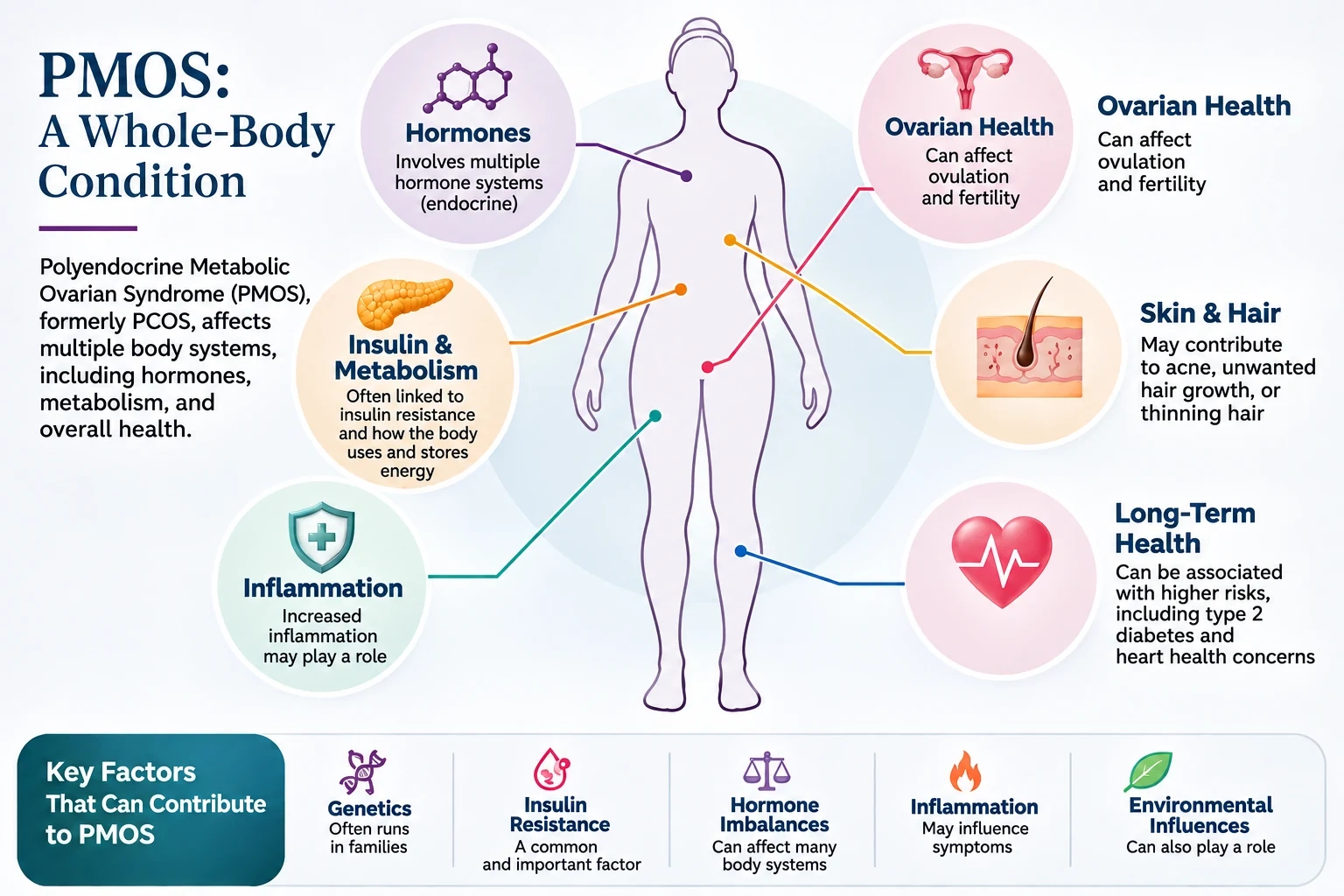
PMOS Whole-Body Health and Hormonal Connections
PMOS Affects the Whole Woman
PMOS is often discovered because of irregular periods or difficulty becoming pregnant, but its effects can reach far beyond reproductive health.
Over time, the condition can increase the likelihood of prediabetes, type 2 diabetes, unhealthy cholesterol or triglyceride levels, high blood pressure, fatty liver disease, sleep apnea, and cardiovascular risk factors. [2,4]
These risks reinforce why PMOS deserves attention beyond the reproductive years. A diagnosis is not a prediction that every patient will develop these conditions. Instead, it provides an opportunity for appropriate monitoring, earlier intervention, and informed decisions about long-term health.
PMOS can also take a very real emotional toll. Living with acne, unwanted hair growth, thinning hair, weight changes, fatigue, or fertility challenges can affect confidence and self-image. Years of unanswered questions may leave a woman feeling frustrated, embarrassed, dismissed, or disconnected from her own body. Anxiety and depression are also more common among women with PMOS. [2,4]
These feelings deserve care, too.
As providers, we have an opportunity to recognize the emotional impact alongside the physical symptoms. Compassionate PMOS care should support a woman's emotional well-being as thoughtfully as it supports her hormonal, metabolic, and reproductive health. [2]
The Good News: The Symptoms Are Connected
When we look at PMOS symptom by symptom, the condition can feel overwhelming. There may be one treatment for acne, another for irregular periods, another for weight, and still another for blood sugar.
But there is a hopeful truth: many of these symptoms are connected.
Irregular periods, acne, hair changes, fatigue, weight struggles, and insulin resistance may be different expressions of the same underlying hormonal and metabolic imbalance. When treatment addresses those deeper connections, several symptoms may begin to improve together. [4,5]
PMOS is complex, but it is manageable. With the right evaluation and an individualized treatment plan, many women experience more predictable cycles, steadier energy, healthier blood sugar, clearer skin, and a renewed sense of trust in their bodies. [2]
Our patients' symptoms are not random. They are information.
The more we understand the hormonal and metabolic relationships behind those symptoms, the better equipped we are to help patients make sense of their experiences and develop a thoughtful, individualized plan for care.
Treatment Options Are Key
Treating PMOS requires looking beyond individual symptoms to address the underlying hormonal and metabolic imbalances. For years, treatment focused primarily on the Rotterdam diagnostic criteria, including irregular ovulation, elevated androgens, and polycystic ovarian morphology, with medications such as metformin commonly used to manage insulin resistance.
Now that we better understand PMOS as a whole-body endocrine and metabolic disorder, treatment approaches must evolve. By placing insulin resistance at the forefront of care, individualized treatment plans can help address hormonal and metabolic dysfunction, improve symptoms, and protect long-term health.
Depending on the patient's needs, treatment may include thyroid optimization when clinically indicated, weight-loss medications, nutrition, physical activity, lifestyle changes, and other appropriate therapies designed to support overall health and well-being.
For providers interested in hormone optimization, PMOS offers a compelling example of why understanding physiology matters. Effective care requires more than recognizing abnormal hormone levels or matching symptoms to a treatment protocol. It requires understanding how insulin, androgens, progesterone, and other hormonal systems interact—and how those relationships influence the whole patient.
Expand Your Understanding of Hormone Optimization and PMOS
Helping women with PMOS begins with recognizing that their symptoms may be connected. Providing comprehensive care requires the clinical knowledge to understand those connections and evaluate the evidence behind available treatment options.
WorldLink Medical's Optimal Medicine Training Series helps physicians, nurse practitioners, physician assistants, and other healthcare providers build that foundation through evidence-based hormone education, clinical research, and practical applications.
Course 1, Mastering the Foundations of BHRT, introduces the science and clinical principles of hormone optimization. Course 2, Navigating Hormone Complexities, builds on that foundation with a deeper exploration of PMOS, metabolic dysfunction, reproductive health, and other complex hormonal conditions.
Because our patients deserve more than isolated answers to individual symptoms. They deserve providers who can see the bigger picture.

PMOS Treatment and Lifestyle Management
References
- Teede HJ, Bahri Khomami M, Morman R, et al.; Global Name Change Consortium. Polyendocrine metabolic ovarian syndrome, the new name for polycystic ovary syndrome: a multistep global consensus process. Lancet. 2026;407(10545):2329-2339. doi:10.1016/S0140-6736(26)00717-8.
- Teede HJ, Tay CT, Laven J, et al.; International PCOS Network. Recommendations from the 2023 International Evidence-based Guideline for the Assessment and Management of Polycystic Ovary Syndrome. Fertil Steril. 2023;120(4):767-793. doi:10.1016/j.fertnstert.2023.07.025.
- Neven ACH, Forslund M, Ranasinha S, et al. Prevalence of polycystic ovary syndrome: a global and regional systematic review and meta-analysis. Hum Reprod Update. 2026;32(3):277-312. doi:10.1093/humupd/dmaf030.
- Dong J, Rees DA. Polycystic ovary syndrome: pathophysiology and therapeutic opportunities. BMJ Med. 2023;2(1). doi:10.1136/bmjmed-2023-000548.
- Di Lorenzo M, Cacciapuoti N, Lonardo MS, et al. Pathophysiology and nutritional approaches in polycystic ovary syndrome (PCOS): a comprehensive review. Curr Nutr Rep. 2023;12(3):527-544. doi:10.1007/s13668-023-00479-8.
- Nestler JE. Role of hyperinsulinemia in the pathogenesis of the polycystic ovary syndrome, and its clinical implications. Semin Reprod Endocrinol. 1997;15(2):111-122. PMID:9165656.
- Legro RS, Arslanian SA, Ehrmann DA, et al. Diagnosis and treatment of polycystic ovary syndrome: an Endocrine Society clinical practice guideline. J Clin Endocrinol Metab. 2013;98(12):4565-4592. doi:10.1210/jc.2013-2350.
Master the essential principles of bioidentical hormone replacement…


