

How Hormone Optimization Changes the Way Practitioners Build Their Practices
In a nutshell:
- Hormone optimization can change more than your treatment options. It can influence how you evaluate patients, plan follow-up, and build lasting clinical relationships.
- Optimal Medicine provides a framework for individualized care. Worldlink Medical's approach begins with hormone optimization, incorporates lifestyle and metabolic health, and considers persistent barriers to wellness.
- Education is the foundation for responsible implementation. Comprehensive BHRT training helps providers develop the knowledge and clinical judgment needed to introduce hormone-focused care.
- You don't have to navigate the transition alone. Ongoing education, mentorship, professional community, and thoughtful practice planning can support your growth.
Rethinking What's Possible With Hormone-Focused Care
Have you ever wished you had more time to explore your patients' symptoms, discuss their long-term health, or follow their progress beyond an occasional office visit? Many healthcare providers are drawn to a more personalized, proactive approach to medicine but find that traditional schedules and workflows don't always leave room for it.
For clinicians interested in hormone health, hormone optimization offers an opportunity to rethink not only the care they provide, but also how their practices are designed to support it.
Rather than treating bioidentical hormone replacement therapy (BHRT) as another service on a treatment menu, a hormone-focused approach encourages a more comprehensive understanding of physiology, individualized treatment decisions, and ongoing patient relationships.
Whether you're exploring hormone therapy training or considering how to incorporate BHRT into an established practice, understanding the clinical and operational implications can help you make informed decisions about your next steps.

How Hormone Optimization Transforms Medical Practice
- Why Hormone Optimization Changes More Than a Treatment Plan
- Optimal Medicine: A Framework for Physiology-Based Care
- How Hormone Optimization Shapes Your Practice
- Build Clinical Confidence Through BHRT Training
- Find Support Beyond the Classroom
- Frequently Asked Questions
- Build a Practice That Supports Your Vision
Why Hormone Optimization Changes More Than a Treatment Plan
Patients rarely experience their health concerns in neat, isolated categories.
Changes in energy, sleep, metabolism, mood, and overall well-being may involve multiple physiologic systems. Understanding those connections can require a more comprehensive evaluation than a single symptom-focused visit allows.
Within Worldlink Medical's framework, hormones are foundational drivers of human physiology. Hormone optimization considers how hormonal changes may influence health while recognizing that treatment decisions depend on clinical evidence, individual risk factors, patient preferences, and professional judgment.
Looking Beyond Individual Symptoms
A physiology-based approach encourages clinicians to consider the relationships among symptoms, medical history, metabolic health, lifestyle, laboratory findings, and other relevant factors.
This may involve more detailed intake, thoughtful laboratory interpretation, medication review, and time for patient education.
The goal isn't to assume that hormones explain every concern. Rather, it's to develop a clearer clinical picture so that treatment decisions, referrals, and follow-up plans reflect each patient's circumstances.
Creating More Opportunities for Ongoing Care
Hormone optimization also places greater emphasis on continuity. Patients receiving hormone therapy may need periodic reassessment as symptoms, laboratory findings, treatment responses, and health goals change.
For many clinicians, this creates an opportunity to build the kind of ongoing relationships they value: relationships with more room for listening, education, monitoring, and shared decision-making. Those relationships also require dependable systems for follow-up, prescription management, patient communication, and coordination with other healthcare professionals.
When the practice is designed to support these needs, individualized care becomes easier to deliver consistently.
Optimal Medicine: A Framework for Physiology-Based Care
Worldlink Medical's Optimal Medicine framework offers a structured, evidence-informed approach to hormone optimization and broader physiologic health.
The framework follows a progression that helps clinicians organize their clinical thinking while allowing for individualized decisions.
Start With Hormone Optimization
Optimal Medicine positions hormone restoration as the foundational first step in its clinical framework.
This differs from some functional medicine approaches, which may begin with other suspected contributors to a patient's symptoms. Worldlink Medical explores this distinction in Functional Medicine vs. Optimal Medicine.
Importantly, a foundational role for hormones does not mean every patient needs hormone therapy. Appropriate evaluation, contraindications, treatment options, and individual circumstances must guide clinical decisions.
Incorporate Lifestyle and Metabolic Health
Nutrition, sleep, and exercise are physiologic amplifiers within the Optimal Medicine framework. These factors influence overall health and may play important roles in how patients respond to care. For practitioners, incorporating these elements may involve lifestyle assessments, patient education, metabolic health monitoring, and referrals to other professionals when appropriate.
Consider Persistent Barriers
When patients continue to experience health concerns, the framework also considers potential barriers such as gut dysbiosis, autoimmune conditions, mitochondrial dysfunction, and epigenetic factors.
These complex areas require appropriate expertise, careful evaluation, and clinically justified testing rather than predetermined treatment protocols.
Together, the three components provide a consistent framework for thinking about patient care without replacing individualized clinical judgment.
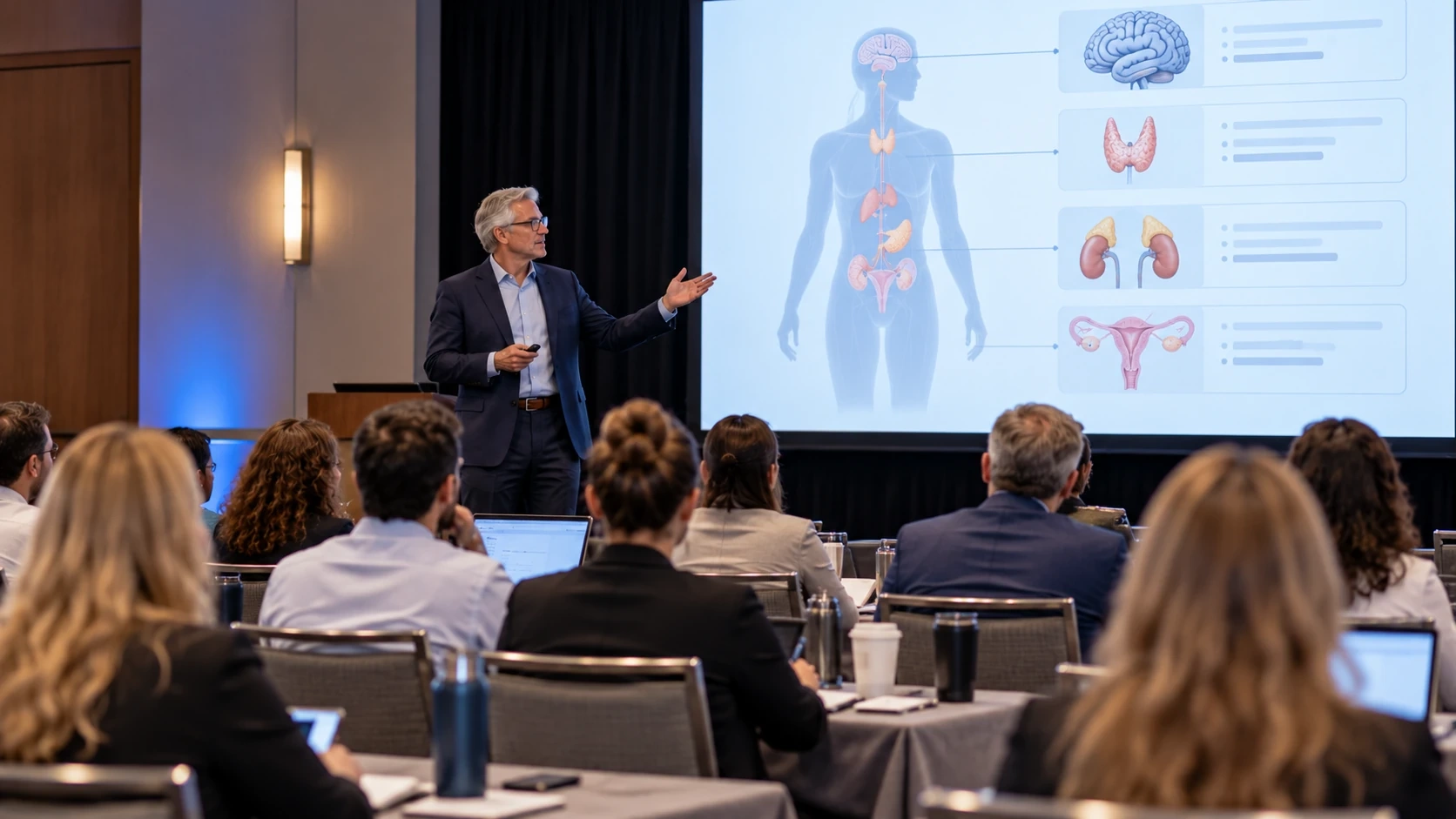
Hormone Optimization Training for Healthcare Practitioners
How Hormone Optimization Shapes Your Practice
Introducing hormone-focused care can influence many aspects of daily practice, from appointment scheduling to patient communication.
That doesn't necessarily mean starting over or building an entirely new clinic. For many providers who are interested in BHRT, though, it does entail switching over to be a cash-pay practice to better support the care they want to deliver.
Make Room for Individualized Care
A hormone-focused practice may benefit from revisiting a few important workflows:
- Appointments and intake: Allow appropriate time to understand patient history, concerns, medications, and treatment goals.
- Laboratory coordination: Establish reliable processes for ordering, reviewing, documenting, and communicating results.
- Follow-up and monitoring: Create clinically appropriate reassessment schedules and clear communication channels.
- Documentation and patient education: Support informed decisions with consistent records, consent discussions, and educational resources.
- Clinical collaboration: Identify referral and consultation resources for patients with more complex needs.
The right approach will look different for a primary care office than for a dedicated hormone clinic. What matters is that your systems fit your patient population, staffing, and clinical responsibilities.
Find a Practice Model That Fits Your Goals
Some clinicians integrate hormone optimization into their existing practices. Others explore cash-pay, hybrid, or membership models.
Each structure offers different considerations related to patient access, appointment time, staffing, overhead, and revenue.
Rather than choosing a payment model first, consider the clinical experience you want to provide and what your practice needs to support it. Whatever model you choose, financial considerations should support rather than drive clinical decisions.
To see what other practitioners have done, join Worldlink’s free Community, which includes business case studies, weekly roundtables, and opportunities for employment and ownership.
Build Clinical Confidence Through BHRT Training
If you're considering adding hormone therapy to practice, it's natural to have questions about the education and experience you'll need.
Hormone-focused care involves more than learning a prescribing protocol. It requires an understanding of physiology, patient selection, laboratory interpretation, risk assessment, monitoring, and complex clinical decisions.
Quality hormone therapy training can help you develop that foundation and recognize when additional expertise or referral may be needed.
What Should Comprehensive Hormone Therapy Training Include?
Look for education that connects foundational science with real-world clinical applications, including:
- Hormone physiology and interactions
- Patient assessment and individualized treatment planning
- Laboratory interpretation and clinical context
- Contraindications, risk evaluation, and prescribing considerations
- Monitoring, treatment adjustments, and documentation
- Clinical cases, shared decision-making, and appropriate referrals
Just as importantly, training should encourage continued evaluation of current evidence and professional guidance.
Worldlink Medical's Progressive Training Pathway
Worldlink Medical recommends completing its first two courses in close succession before introducing BHRT services.
Course 1: Mastering the Foundations of BHRT establishes foundational hormone physiology and clinical concepts.
Course 2: Navigating Hormone Complexities builds on that knowledge through more advanced hormone-related considerations and clinical applications.
Each course includes three immersive days of education featuring expert lectures, research, interactive quizzes, and case discussions. Providers can attend in person or virtually, with recordings available for two weeks after the event.
The progressive format helps clinicians build knowledge before moving into more complex clinical situations.
Demonstrating Knowledge Through Certification
For eligible clinicians seeking to demonstrate their education and competency, Worldlink Medical offers the Clinical Certification in Hormone Optimization (BHRT).
The certification builds on the first two courses and includes a competency-based examination.
|
Pathway Component |
Purpose |
Requirements |
|
Course 1: Mastering the Foundations of BHRT |
Establishes foundational hormone knowledge and clinical concepts. |
Complete before advancing to certification. |
|
Course 2: Navigating Hormone Complexities |
Builds knowledge for more complex clinical situations. |
Complete before certification. |
|
Clinical Certification in Hormone Optimization (BHRT) |
Evaluates knowledge and competency developed through the first two courses. |
Approximately 200-question online examination, minimum 80% passing score, completion within one year, and a $575 exam fee separate from course registration. |
Certification provides a way to demonstrate completion of a structured educational pathway and assessed knowledge. It does not expand a professional license, grant prescribing authority, or replace ongoing clinical development.

Hormone Optimization and Collaborative Practice Development
Find Support Beyond the Classroom
Even with excellent training, new questions are bound to arise as you begin applying what you've learned.
You may encounter an unfamiliar patient presentation, want to explore new research, or need advice about integrating a service into your existing workflow.
Having access to experienced educators and a professional community can make that process less isolating. That’s why all practitioners who complete a course with Worldlink are encouraged to join its online community.
Learn From an Experienced Clinical Community
Worldlink Medical has trained more than 14,000 providers in hormone optimization and BHRT, and its online practitioner community includes approximately 5,000 providers.
Through clinical discussions, mentorship, weekly live learning experiences, and research resources, providers can continue developing their knowledge and exchanging perspectives with peers.
These opportunities can support professional growth while reinforcing the importance of independent clinical judgment, patient privacy, and appropriate consultation.
Get Help With Practice Implementation
Not every practice challenge is clinical. You may also have questions about patient communication, scheduling, staffing, technology, or how to introduce a new service without disrupting your existing practice.
That’s why Worldlink Medical’s community also includes practice-building resources that can help you think through implementation decisions and connect with others who are navigating similar transitions.
Above all, the community exists to remind you that hormone training isn’t a one-and-done experience. Continued engagement with peers, mentors, and educators can help you grow and develop both your clinical knowledge and business acumen.
Frequently Asked Questions
There is no single national BHRT certification required by law. Clinicians must have the appropriate license, prescribing authority, competence, and state-specific scope of practice to provide hormone therapy.
Certification can demonstrate additional education and assessed knowledge, but it does not replace those requirements.
Yes. Eligible nurse practitioners can pursue BHRT certification for nurse practitioners through educational programs open to their profession.
Their authority to prescribe and manage hormone therapy continues to depend on applicable state laws, licensure, and any collaboration or supervision requirements.
Build a Practice That Supports Your Vision
For many clinicians, the interest in hormone optimization begins with a desire to offer more personalized, proactive care. That interest can open the door to a broader conversation about how your practice supports your patients, your clinical priorities, and your professional goals.
Whether you're adding BHRT to an established clinic or considering a new practice model, you don't have to make every decision at once.
Start by developing your clinical foundation. Consider what your patients need and how your existing systems can support those needs. Then explore the education, mentorship, and practice-building resources that can help you move forward.
Worldlink Medical can support you throughout that journey.
Explore the Optimal Medicine Training Series to learn how structured hormone therapy education and continued professional support can fit into the practice you want to build.
Master the essential principles of bioidentical hormone replacement…


